
Why KPIs and Performance Management Systems Fail (And What Actually Works)

Add Your Heading Text Here

Listen to or watch on your favourite platform

Show Notes

Episode Summary

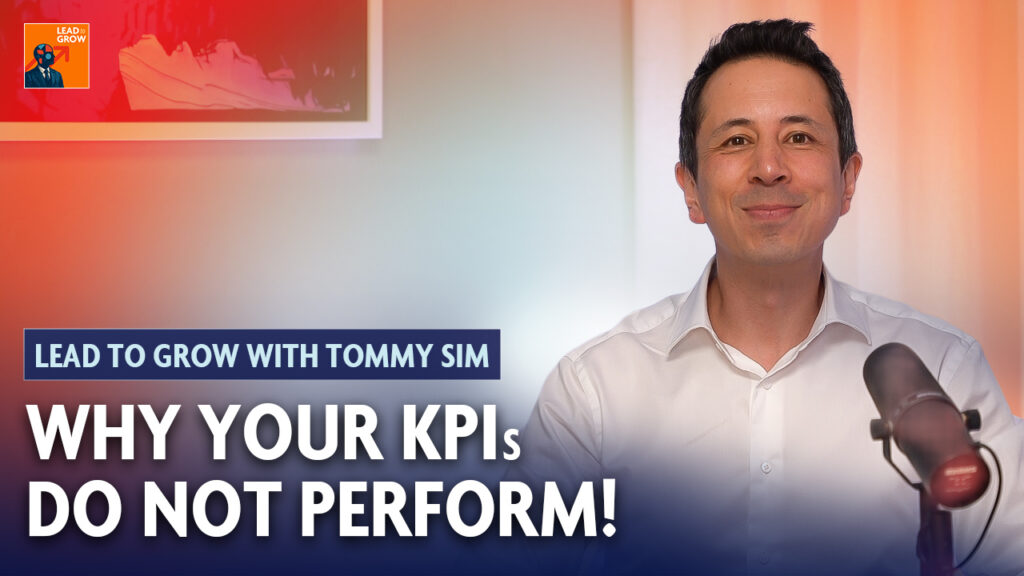
You’ve heard all the clichés about performance measures. What gets measured gets managed. Where attention goes, energy flows. And you’ve probably had a business mate tell you they’ve got the right KPIs in place and that’s what truly drives performance.

So you ask yourself: why isn’t it working in our business? Do we have the wrong KPIs, or is there some other problem that we can’t see?

In Episode 7 of Lead to Grow, Tommy unpacks why so many attempts at KPIs and performance measures fail, the common mistakes that occur, and what you should do differently to avoid this happening. We start with the real reasons leaders introduce performance measures in the first place: people working hard completing tasks but not achieving what’s truly valuable, expectations not being clearly set, and employees saying they don’t know what success looks like.

You will learn:

  • Why “what gets measured gets managed” is an oversimplification
  • The real reason most KPI and OKR systems don’t improve performance
  • The critical differences between KPIs and OKRs, and why neither works on its own
  • How measuring what’s easy can undermine trust and motivation
  • Why too many KPIs dilute focus and kill follow-through
  • The hidden cost of set-and-forget performance systems
  • Why performance measures must be part of a broader people system
  • The five practical steps leaders can take to make performance systems work
  • How poor follow-up and weak leadership conversations derail good intentions
  • Why context matters more than frameworks in performance management

Key insights from the episode:

Performance measures are signals, not solutions.
KPIs and OKRs don’t improve performance by themselves. They only tell you what’s happening. Without strong leadership, role clarity, capability, follow-up and feedback, they become noise.

Switching frameworks won’t fix broken systems.
Moving from KPIs to OKRs is like replacing a car dashboard when the engine is broken. If the underlying people system isn’t working, a new framework just creates new frustration.

Most KPI systems fail for predictable reasons.
Common mistakes include measuring trivial things, using vague or unmeasurable goals, tracking too many metrics, failing to involve the team, and expecting the system to work without ongoing effort.

Follow-up is where performance systems succeed or fail.
The real work begins after KPIs are launched. Without consistent conversations, reinforcement and leadership capability, even well-designed systems fade into irrelevance.

There is no neutral performance system.
Every framework nudges behaviour in certain directions and suppresses others. The right question isn’t “Which framework is best?” but “What behaviours is this system encouraging in our context?”

Practical takeaways for leaders

  • Treat performance measures as part of an integrated people system
  • Define success in words first, then make it SMART
    Involve the right people at the right points, with clear boundaries
  • Schedule regular follow-up and make it visible
  • Invest in developing leaders who can have effective performance conversations

Connect with us:
Tommy Sim: https://www.linkedin.com/in/tommysim/
LinkedIn: https://www.linkedin.com/company/injecthr
YouTube: https://www.youtube.com/@injecthr
Instagram: https://www.instagram.com/inject.hr/

Who this episode is for:

  • Business owners and founders
  • Senior leaders and people managers
  • HR and people & culture professionals
  • Anyone frustrated by KPIs, OKRs or performance reviews that don’t stick

About Lead to Grow
Lead to Grow explores the people principles behind high-performing businesses. Hosted by Tommy Simp, the podcast focuses on leadership, performance, culture and decision-making, with practical insights leaders can apply immediately.

New episodes released regularly.

If you found this episode useful, share it with someone who’s wrestling with KPIs or performance management.
Follow the show on Apple Podcasts and Spotify, or subscribe on YouTube for future episodes.

9 Rules for Good Commission Schemes

Add Your Heading Text Here

Listen to or watch on your favourite platform

Show Notes

Episode Summary

Incentive schemes are everywhere in business. Bonuses. Commissions. Short-term rewards designed to drive performance.

And yet, for so many leaders, these beautifully designed schemes quietly fail to deliver what they promise. Worse, the unintended consequences often outweigh the benefits.

In this episode of Lead to Grow, we unpack the dark art of incentive schemes and why so many well-intentioned reward structures distort behaviour, damage motivation, and fail to improve real performance.

This is not an argument against incentives. It is a practical guide to when they work, when they fail, and how to design them intelligently if you choose to use them.

You will learn:

  • Why leaders fall in love with incentive schemes and why they are often overused
  •  The difference between improving performance and simply redirecting effort
  • Why money is a blunt instrument for motivation
  • The intrinsic vs extrinsic motivation equation and why it matters
  • How incentives can quietly reduce job satisfaction and engagement
  • When incentives actually make sense and when they backfire
  • Why complexity kills most incentive schemes
  • How poorly designed schemes distort behaviour and damage trust
  • The downside risks most leaders never anticipate
  • Why incentives rarely fix capability, culture, or leadership problems

We also break down where incentive schemes can work, particularly in sales and output-driven roles, and how to think about:

  • Whether a role is genuinely suitable for incentives
  • Pay splits and what ratios make sense
  • Thresholds and why 75% matters
  • Caps vs uncapped schemes
  • Time horizons and payment frequency
  • Rules, edge cases, and why clarity matters
  • Retention vs attraction dynamics
  • Designing schemes that are actually self-funding

Finally, we outline the hallmarks of a well-designed incentive scheme, including:

  • Job simplicity
  • Line of sight
  • Pay split alignment
  • Caps and escalation
  • Rules and edge cases
  • Time horizons
  • Thresholds
  • Management discretion
  • Base salary alignment

The core message is simple:
Incentive schemes are powerful, but they are blunt instruments. They are the exclamation mark, not the sentence.

When used well, they create clarity and focus.
When used poorly, they distort behaviour, undermine motivation, and create long-term problems disguised as short-term gains.

If you are considering implementing an incentive scheme, or questioning whether your current one is actually working, this episode will help you avoid expensive trial and error.

Connect with us:

If you lead people or design reward structures, this episode will change how you think about money, motivation, and performance. Subscribe to Lead to Grow for more practical, human-centred leadership insights.